647-825-4243 Tax.Nehal@gmail.com
Illustration showing common crypto and DeFi tax traps for Canadians in 2025, including taxable bridging, staking rewards, wallet-to-wallet misconceptions, lost crypto assets, and CRA audit risk

Crypto & DeFi Tax Traps Canadians Are Still Falling for

Crypto taxation in Canada has evolved, yet many taxpayers remain unaware of the complexities involved. In 2025, the Canada Revenue Agency (CRA) is focusing on how crypto is used, exposing Canadians to costly tax traps. Misunderstandings around bridging tokens, staking rewards, and wallet transfers can lead to significant penalties. Beliefs like “no cash out = no tax” are increasingly risky. This article reveals the most common pitfalls and how to navigate them, ensuring you stay compliant and avoid audits. Don’t let misconceptions cost you—understand the nuances of DeFi taxation today!

Ontario pre-construction condo illustration showing legal exit options for buyers, including builder breach of contract, PDI issues, outside occupancy dates, and when to consult a lawyer

Pre-Construction Condo Market in Ontario (2025):

Navigating the Ontario pre-construction condo market can be daunting, especially with rising interest rates and extended delays. Many buyers are left wondering if they can exit their agreements without facing penalties. This article uncovers the legal avenues available to buyers, highlighting common builder mistakes that can create opportunities for termination. From understanding the critical Statement of Critical Dates to knowing when to involve a lawyer, we provide essential insights to empower buyers. Don’t let unexpected challenges derail your investment—discover how to protect your rights and financial interests in this shifting landscape.

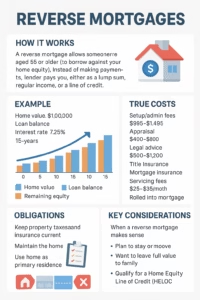
Infographic explaining how reverse mortgages work, showing example loan balance growth, costs, borrower obligations, and key considerations for homeowners aged 55 and older.

Reverse Mortgages: The Real Costs, Conditions, and What Happens When Equity Runs Out

For many older homeowners, a reverse mortgage can be both a lifeline and a risk. It allows you to tap into your home’s value without selling or making monthly payments, but it’s not free money. Understanding the real costs, conditions, and potential pitfalls is essential before signing anything. What happens when your home equity runs out? Discover how a reverse mortgage works, the pros and cons, and when it makes sense to consider this financial option. Don’t let misconceptions drain your wealth—learn how to make your home work for you in retirement.

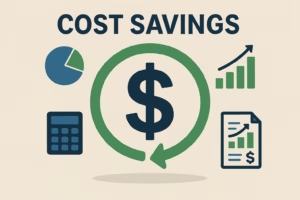
Infographic illustrating business cost savings with a central dollar sign surrounded by green arrows and icons of charts, a calculator, and financial documents, symbolizing profit growth and expense reduction

Cost Savings: The Direct Route to a Stronger Bottom Line

Every business is on a quest for profit, but the unsung hero of sustainable profitability is cost control. Did you know that trimming unnecessary software subscriptions can boost your bottom line significantly? Subscription creep can quietly drain your resources, leading to profit leakage. Imagine saving $10,000 a year — that’s the equivalent of generating an extra $100,000 in sales without any additional effort! Discover how smarter software choices can lead to permanent cost savings and a stronger financial future. Ready to stop the leaks and protect your profits? Dive into our guide on maximizing cost savings today!

Infographic showing 2025 CRA car deduction limits in Canada: $38,000 capital cost allowance cap, $350/month interest deduction limit, full HST input tax credit for 90%+ business use, with four real-world car purchase examples.

Can You Claim Full HST and Car Deductions on a Passenger Vehicle in? CRA Sets Different Limits

Are you a business owner wondering about the intricacies of HST and car deductions for your passenger vehicle? The Canada Revenue Agency (CRA) has established specific limits that could significantly impact your tax claims. Understanding these regulations is crucial for maximizing your deductions and ensuring compliance. In this article, we delve into the nuances of claiming full HST and car expenses, providing you with the insights you need to navigate the complexities of tax deductions. Don’t miss out on potential savings—read on to discover how to optimize your claims effectively!

Infographic comparing Federal Incorporation, Provincial Incorporation, and Extraprovincial Registration in Canada. Federal Incorporation section shows a courthouse icon with text 'Canada-wide' and 'Greater name protection.' Provincial Incorporation section shows a provincial map icon with text 'One province only' and 'Lower cost.' Extraprovincial Registration section shows a document icon with text 'Register in other provinces' and 'Needed to expand

Federal vs Provincial Incorporation in Canada: What’s the Difference and Which One Should You Choose?

When it comes to starting a business in Canada, one of the most crucial decisions you'll face is whether to incorporate federally or provincially. Each option comes with its own set of advantages and challenges that can significantly impact your business's growth and operations. Are you looking for broader market access or a simpler regulatory environment? Understanding the key differences between federal and provincial incorporation can help you make an informed choice that aligns with your business goals. Dive into our comprehensive guide to discover which incorporation route is best suited for your entrepreneurial journey!

Financial documents, calculator, and keys on a wooden table with a hand pointing to a paper labeled 'Loss Carry Back,' representing corporate tax refund strategy and CRA compliance.

How Loss Carry-Back Can Save Your Corporation Thousands: A CRA Strategy You Shouldn’t Ignore

Are you aware that your corporation could potentially save thousands of dollars in taxes? The Loss Carry-Back strategy, endorsed by the Canada Revenue Agency (CRA), is a powerful tool that allows businesses to offset current profits with previous losses. This means you can reclaim taxes paid in prior years, providing a much-needed financial boost. In this article, we’ll explore how this strategy works, the eligibility criteria, and the steps you need to take to maximize your savings. Don’t let this opportunity slip away—discover how to leverage Loss Carry-Back to enhance your corporation’s financial health today!

Infographic showing 5 costly mistakes new businesses make, including failing to incorporate, choosing the wrong incorporation type, mixing business and personal finances, ignoring legal liability, and DIY-ing corporate tax filings.

5 Costly Mistakes New Businesses Make — and How to Avoid Them

Starting a new business can be an exhilarating journey, but it’s also fraught with challenges that can lead to costly mistakes. Many entrepreneurs dive in headfirst, only to find themselves facing unexpected hurdles that could have been avoided with a little foresight. In this article, we’ll explore five common pitfalls that new businesses often encounter and provide practical strategies to steer clear of them. Whether you’re just launching your venture or looking to refine your approach, understanding these mistakes can save you time, money, and stress. Read on to equip yourself with the knowledge to thrive in the competitive business landscape!

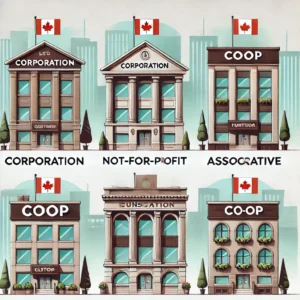
Illustration of Canadian business types—corporation, not-for-profit, and cooperative—with required legal suffixes like Ltd., Inc., Foundation, and Co-op

Guide to Legal Elements for Business Incorporation in Canada: Corporations, Not-for-Profits, and Cooperatives

Incorporating a business in Canada is a crucial step that goes beyond mere registration; it’s about defining your organization’s identity and purpose. Whether you’re establishing a business corporation, a not-for-profit, or a cooperative, understanding the mandatory legal elements is essential. These suffixes not only convey your entity's legal status but also enhance your credibility with stakeholders. This guide will help you navigate the complexities of naming your organization, ensuring compliance while aligning with your mission and branding goals. Discover the right terms to elevate your business and make a lasting impression in the marketplace!

Flowchart of income flow between an operating corporation, holding Incorporation, and shareholders for tax savings

Tax Savings with a Holding and Operating Incorporation Structure

Incorporating your business can unlock a treasure trove of tax benefits, especially for partners looking to lighten their personal tax load. By establishing both a holding corporation and an operating corporation, you can strategically manage income distribution, minimize personal tax liabilities, and enjoy valuable tax-deferral advantages. Imagine being able to control when and how you are taxed on your earnings! This innovative structure not only protects your assets but also offers flexibility in financial management. Dive into the world of tax-efficient strategies and discover how you can maximize your savings while securing your business's future.